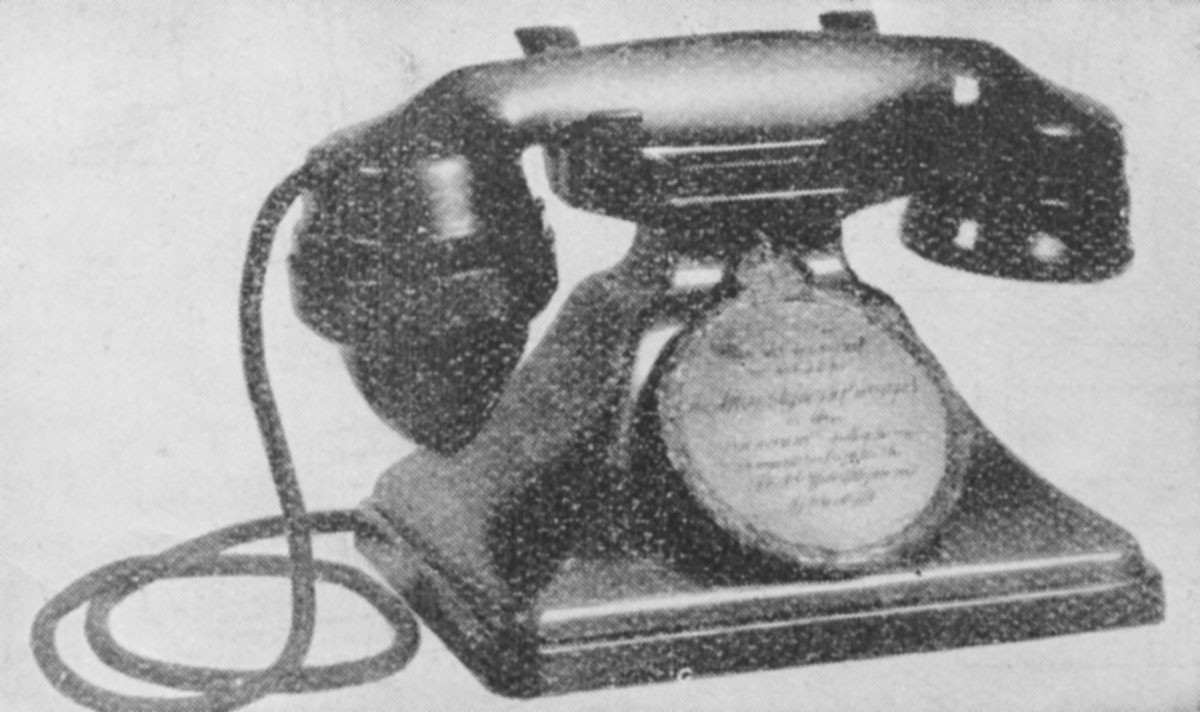
COMMUNICATION without connecting wires—wireless or radio—is truly a marvel of modern marvels. To understand how wireless works it must be first remembered that apart from the air, the houses, buildings, people and everything else, there is an all penetrating substance known as the ether—not to be confused with ether gas. Electrical vibrations are able to travel in this strange ether—through bricks and mortar, and through the atmosphere in all directions. Such disturbances can be made very rapidly one after the other, or rather more slowly like waves on the surface of a pond when a stick is wriggled at one side of it.
|
|
Marconi is the great name in the history of wireless. Although Clark Maxwell and others had discovered that repeated electrical disturbances set up and radiated waves through space, Marconi was the pioneer in putting this discovery to practical use. Guglielmo Marconi was born in 1874 near Bologna in Italy, his mother being an Irishwoman. His first experiments in wireless telegraphy were made in Italy when he was twenty-one years old, and the next year, 1896, they were put to practical use in England. Three years later the world marvelled when he transmitted messages across the English Channel, but this achievement was far eclipsed when he spanned the 2000 miles between Cornwall and Newfoundland. It is pleasing to know that the British Post Office was among the first to realise the possibilities of this marvellous invention and early arranged for the commercial transmission of wireless messages.
|
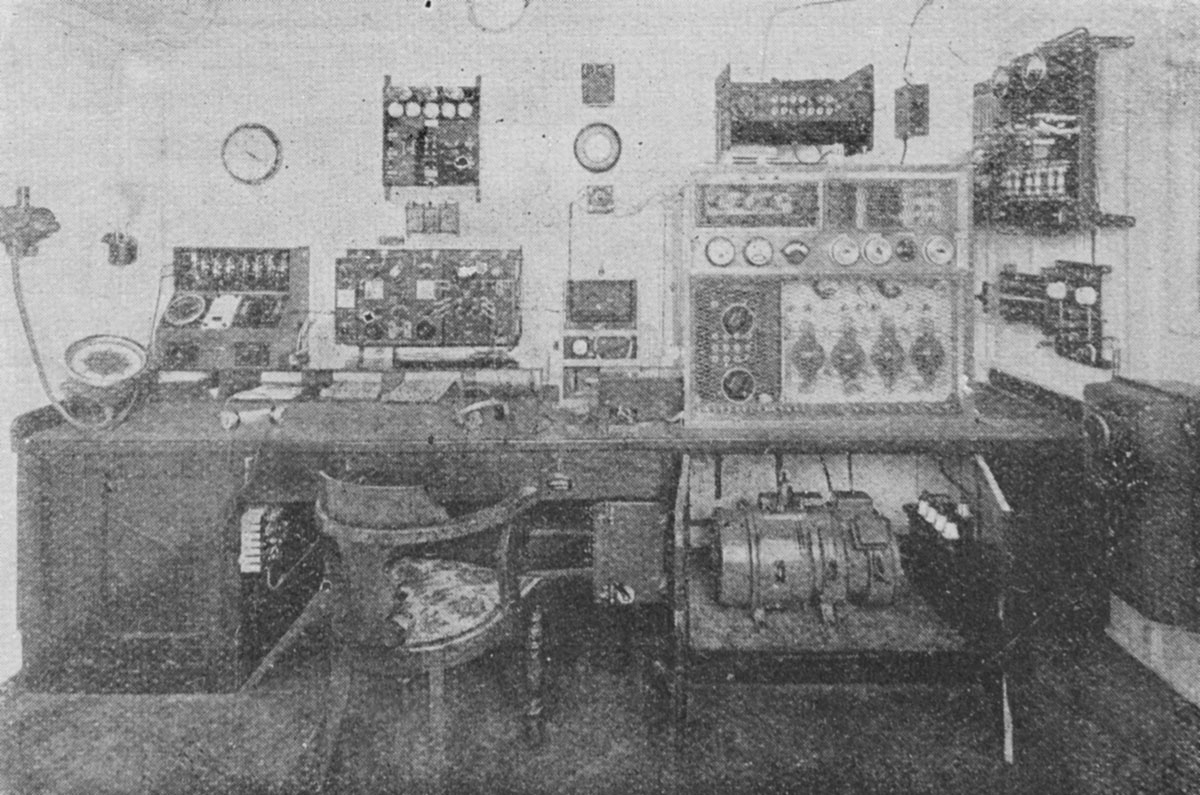
The value of Marconis invention was enormous; it enabled ships to be in constant touch with each other and with their home ports, whereas, previously, they were absolutely isolated during the voyage. Morse messages could now be flashed across sea and land without the necessitv of first laying expensive cables. The first ocean newspaper could now be published on Atlantic liners, the news being picked up by wireless, and recently it has led to the wireless telephone and broadcasting. When we tune in our wireless sets we often hear an intermittent buzzing—it is a Morse message being sent probably from a ship in mid-ocean to a port.
|
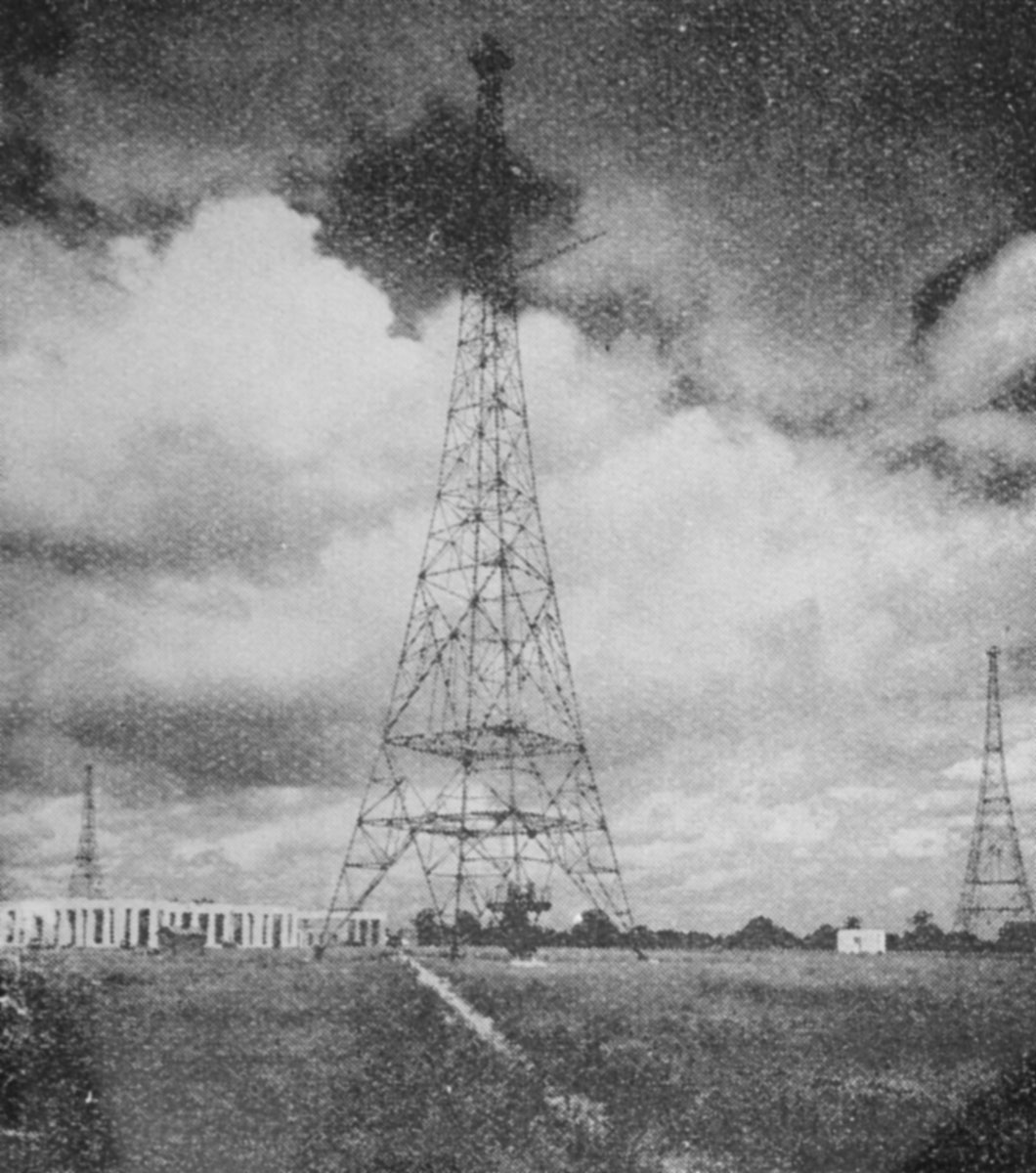
In wireless telegraphy the message is sent out as a series of electrical impulses which are discharged into space by the sending station, and picked up by the aerial of the receiving station, where they are changed into sound by much the same means as the ordinary telegraph employs. By the beam system of wireless telegraphy words are transmitted at the rate of 200 a minute.
Wireless telegraphy is restricted to the transmission of signals such as Morse, which have to be interpreted before they can be understood by the ordinary person, but it was natural that, having gone so far, electrical engineers were not satisfied until they had a wireless telephone which would serve just as an ordinary telephone, except that no wires were to connect the speaker’s instrument with the listener’s. This was a much more difficult problem, for it meant that instead of the uniform note necessary for telegraphy all possible changes of pitch and tone of voice had to be transmitted in the form of electrical waves.
|
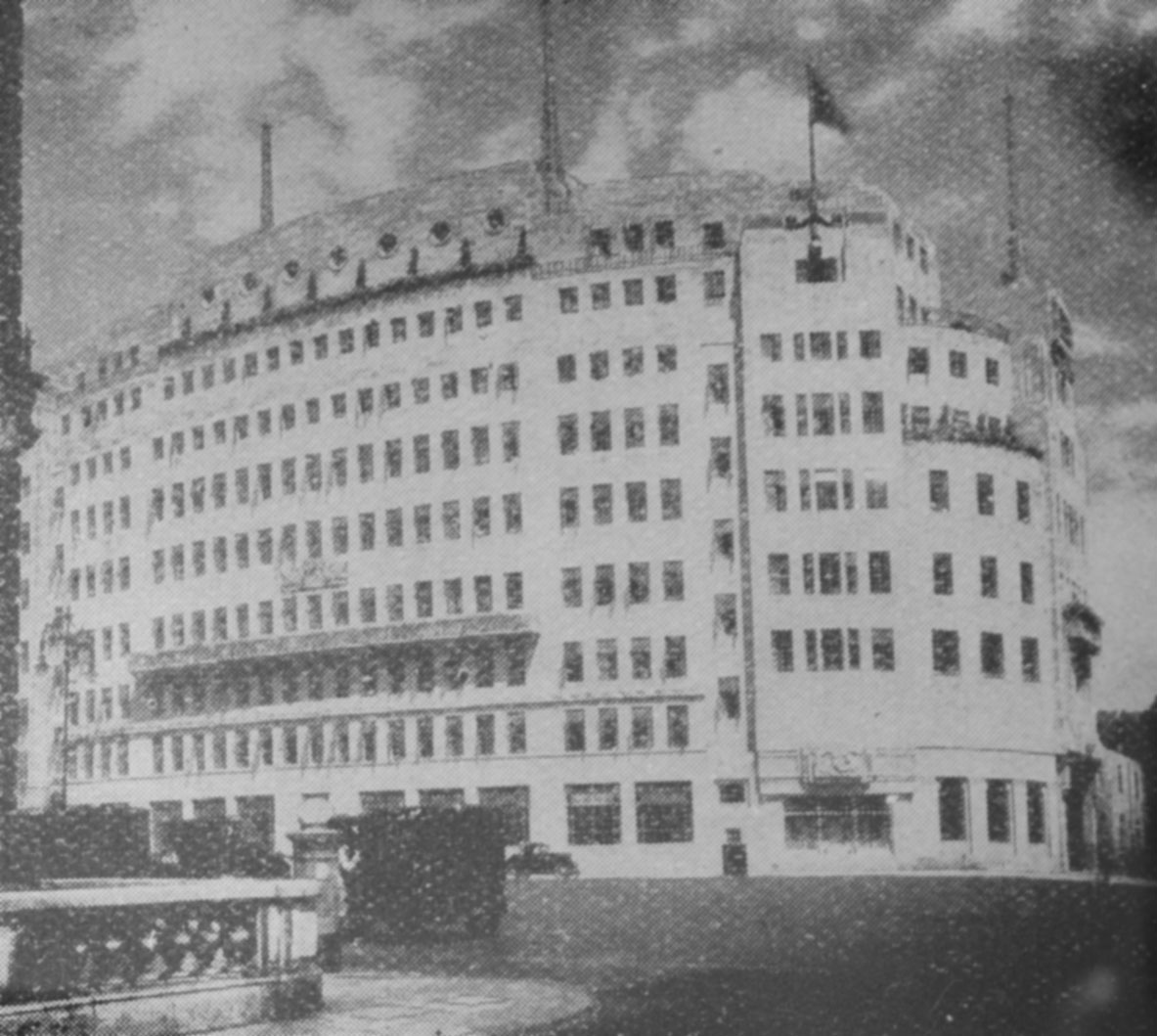
However, after thirty years of research it was accomplished, and the first transoceanic telephone service in the world was opened in 1927 when the British Post Office and the American Telephone and Telegraph Company were linked by radio. This service has been rapidly extended until London has become the central exchange, as it were, of a world-wide systern of radio telephony which extends to the British Dominions, North and South America, Egypt, the Continent of Europe and the principal Atlantic steamships; in fact, nineteen out of every twenty of the world’s telephones can now be connected in this way.
The one great drawback to wireless communication at the present time is the lack of privacy. With the telephone there is a reasonable assurance that the only person listening is the one intended to hear, but any one with a good wireless set can pick up wireless messages without much difficulty whether intended for his ears or not. Even this drawback is now being overcome to some extent by the use of an ingenious mechanism known as a “Scrambling Machine,” which thoroughly jumbles up messages spoken into the wireless telephone before they are transmitted into space, so that anybody listening in hears only a hopeless jingle of sounds, but the person for whom the message is intended has a machine precisely similar to the speaker’s which changes the sounds back into their original form, and, therefore, hears the message exactly as it is spoken!