|
|
We are all so used to the things around us, our houses and furniture, our food and clothing, the streets and buses, the policemen and the postmen, that we do not think they are anything to wonder at. We do not think the big shops at all marvellous, and we do not even wonder how the doctor knows how to make us well, or how our statesmen are able to govern our country, or our architects and engineers plan our buildings, roads and railways. But there was a time when people had none of these things. It is only through the thought and work of many generations of people that these things have come to be, and it is only by knowing about the changes that have taken place in the ages through which people have lived and worked in many different countries that we can see the wonder of everyday things. In the following section we shall look at some of these.
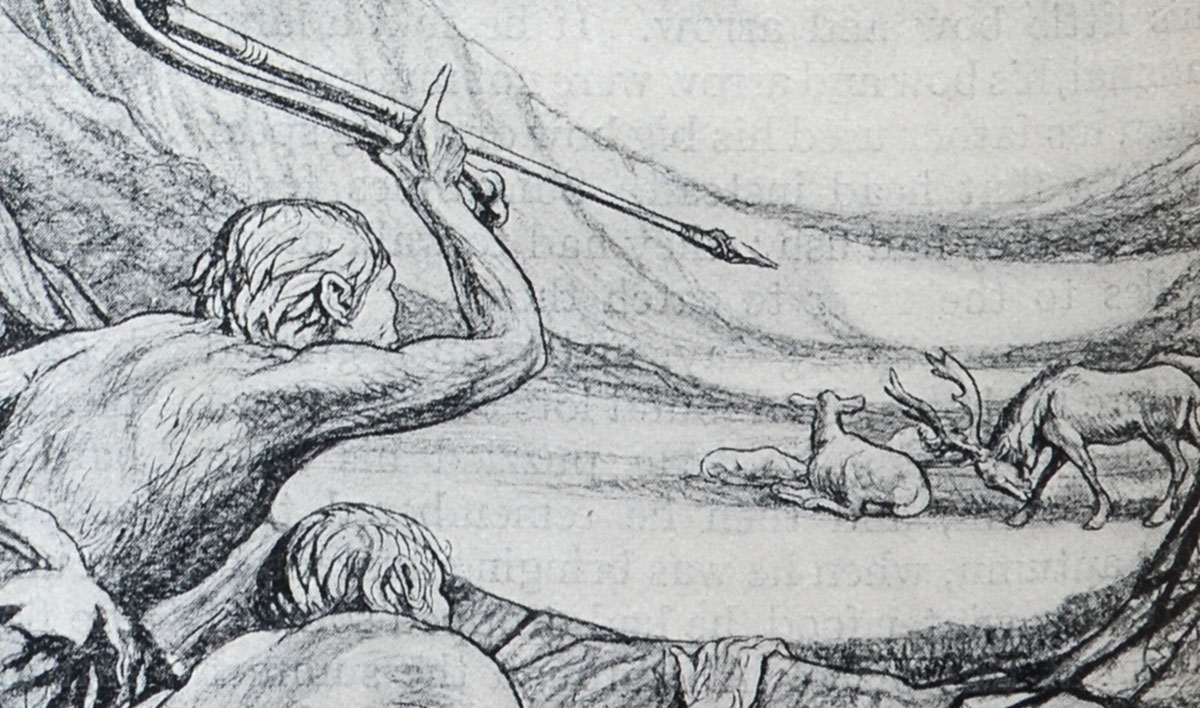
HOW would you like to get up in the morning and go out and hunt for your breakfast before you could have it ? This was what Kali and his father had to do many thousands of years ago. Kali, however, thought it was quite fun hunting for breakfast. Sometimes he gathered nuts and seeds and berries; sometimes he killed wild animals with his little bow and arrow. If he met a large animal, his bow and arrow were not much good; then his father used his big bow or a long spear with a flint head instead. Sometimes for a change they had fish; they had to walk many miles to the river to catch them.
One sunny spring day, in the open ground before his home, Kali found lots of little green blades springing up. He puzzled his head about them, and then he remembered that last autumn, when he was bringing in seeds to store for winter food, he had dropped some of them at this place. All through the summer Kali and his father and mother watched the little green blades grow into big plants, until at last they could gather seeds from them.
Then Kali’s father thought of a grand scheme. Why not get lots more seeds and spread them all over the open spaces? Ther next year they would have plenty of seed: without going into the woods every day to gather them. So Kali spent long days gathering all the seeds he could find, while his mother broke up the hard surface of the ground with a stone hoe. Then his father scattered the seeds, and when the next summer came, there was quite a large field of corn. For it was wild corn that Kali had gathered and dropped on his way home.
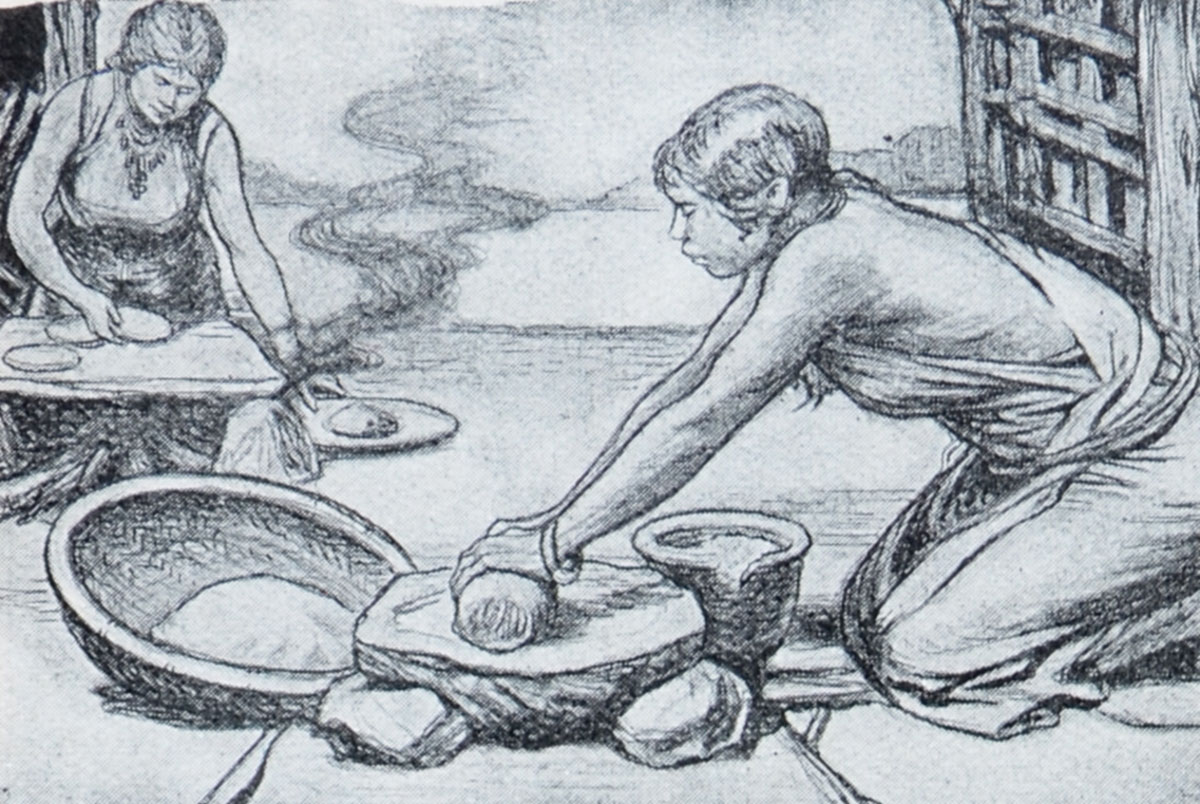
When they had lots of seeds, Kali’s mother began to think how she could make them pleasanter to eat, for they were very dry and hard in their husks. She took two flat stones and ground the corn between them. She ground the husks as well as the kernel, so that the flour she made was brown and gritty, not soft and white as ours is. Still it was better than the whole seeds. Then she mixed it with wild honey and made it in to a cake which she baked between stones in the ashes of the wood fire. This coarse, sweetish bread was much nicer to eat than dry seeds.
|
To-day all over the world people eat bread, rye bread and barley bread as well as wheaten bread, black, brown and white, baked in large ovens into crisp square loaves or crusty, knobby ones. And it all began with a wood fire, and two large stones, and corn sown by hand in almost in turned ground, many many thousands of years ago.
Have you ever thought what we should do without meat and milk, butter and cheese? Yet there was a time long ago when people had no milk because they had no tame animals, and the only meat they ate was the flesh of the wild animals they hunted. At first they ate this raw; then they learned to cook it in a clay pot hung over the fire or in a hole in the ground filled with water heated by putting hot stones into it.
It was not only very early people like Kali’s father who hunted their food; all through the ages people have done this. In Egypt long ago the great nobles used to have grand hunting parties when they killed gazelles and ibexes with spears, throwing-sticks, or bows and arrows. Often too they went out in light little boats along the marshes of the Nile Delta to kill wild birds, and then they took a cat with them!
In our country in the Middle Ages great lords and ladies went out hunting for amusement as well as to get things to eat. If they were going to hunt a fierce animal like the boar, which lived then in our forests, the men went alone, because it was a dangerous sport. If they were going to hunt deer, they went on horseback with dogs, and shot the deer with their bows and arrows. The flesh of the deer was called venison, and it is still eaten in many countries to-day. Ladies went with them when they were going to hunt smaller things like wild birds. They all rode out in the early morning with hooded falcons perched On their wrists, and when they saw their prey, they unhooded and loosed the falcons to follow it and bring it down .
We still eat the flesh of small wild animals like hares and rabbits, and of many wild birds but most of our meat is the flesh of animals specially bred for the purpose. Some of it we breed at home, but by far the larger part of it comes from overseas. This has only been possible since we learnt how to keep meat from going bad by freezing. You have all seen chilled and frozen meat in the butcher’s shop, I expect. But you would not have seen it there fifty years ago.
If people had not learnt how to tame animals, we should not now be able to get meat from all over the world. It happened about the same time as people learnt to grow corn. In the long, hard winters they found that the wild animals would venture near their huts in search of food. So they encouraged them to come closer and closer by putting food down for them, and then caught them with ropes and set to work to tame them. They tamed goats and sheep and oxen, and later pigs. They tamed birds too; in Babylon and Egypt they had flocks of geese and ducks, and the Romans kept hens at their country houses.
At first people did not often kill these tame animals for food, for they were too useful for other things. The sheep gave them wool to make cloth, the goats and the cows gave them milk to drink, and soon they learnt how to make butter and cheese. But as they got more and more animals, they found they could afford to kill some of them and eat them. For many centuries a man had to kill most of his animals in the autumn, because the only food he had for them was hay and he had not enough of this to last the whole year round. That was why the salt that we buy so cheaply to-day was such a precious article in olden times. It was needed to salt the meat to keep it. Even so, the meat did not keep very well, and then it had to be spiced to make it taste pleasant. So the little nuts and powders mother keeps in her store cupboard were greatly needed, and many people made fortunes by sailing away to the East to the Spice Islands, and bringing back cargoes of spices.
|
It was not until about two hundred years ago that people were able to have fresh meat in winter as well as in summer. Then an Englishman, called Coke of Holkham, began to grow root crops, such as turnips and mangolds, in large quantities. These could be stored to feed the animals during the winter, so that they no longer had to be killed and the meat salted. We are so used to having fresh meat every day now that we do not think it at all wonderful; but if you had lived in the reign of Charles I you would have been very surprised indeed. And you would have been still more surprised to learn that lamb could come from New Zealand and beef from the Argentine.