
High above the Arctic Circle, clinging closely to the coast of Greenland and the northern shores of Canada, is a race of people called the Eskimos. They are a very ancient race, probably derived from the same stock as the Chinese, and far back in the dawn of history they were living the same hard, primitive life which they are living to-day. The Eskimos have no coal fires to keep them warm, no sheep to supply them with wool, and. they grow no corn from which to make bread; yet, without any of the comforts which more southern people enjoy, these people of the far north find amongst their frozen wastes all the necessities of life to keep them healthy and strong and happy.
These people of the far north are great hunters, and most of their food comes from the sea. For weapons they have a bow made out of the rib of a whale, arrows, spears, and harpoons. The latter have detachable points to which the Eskimos tie sealskins filled with air. When the quarry is struck, the point comes away from the shaft, but the sealskin float keeps it from being lost, and not only shows the hunter where to find his kill, but prevents it from sinking beyond his reach.
With such primitive weapons the Eskimos go courageously to hunt the whale, the walrus, and the seal. They have no big boats. The boats of the Eskimos are tiny canoes, called kayaks, made of sealskins stretched on frames of wood or whalebone. Each man has his own kayak, and he sits in the canoe with his body protruding through a hole in the skin deck. When afloat the Eskimo ties a waterproof skin round the top of this hole and also round his body so that the little craft is absolutely watertight, and so skilful are the Eskimos in handling their kayaks that a clever paddler can turn a somersault right through the water, canoe and all, without shipping a drop of water.
|
|
The Eskimos eat fish, birds, roots and berries, but their chief food consists of reindeer, seals, and whales; indeed, without these animals the Eskimos could not exist. Reindeer and seals supply the skins out of which they make their clothes, whilst the blubber of the whale is used both for fuel and for cooking purposes
Their land is the country of the midnight sun, and for many weeks in the summer the sun never sinks below the horizon and there is constant day. At such times the Eskimos live in tents of reindeer or sealskin, but in the long winters, when the sun is never seen and the temperature sinks far below freezing point and the blizzard howls over the frozen wastes, they live in stone huts half buried in the ground and only reached by long passages so low that they have to crawl on hands and knees. Sometimes, however, there are no stones with which to build the hut; then these ingenious people cut blocks of hard, frozen snow and build. them into a hut which soon becomes a solid dome of ice and will keep the family snug and warm all through the coldest weather.
There is no room for a fire inside these huts. Warmth, light and heat for cooking are all supplied by primitive lamps burning blubber, and even in the coldest weather the inside of an Eskimo hut is often intolerably hot. The Eskimos are great eaters, and when food is plentiful a man will eat as much meat in a day as would keep an Englishman for a week.
Eskimo men and women dress alike and their clothing consists of a jacket and trousers which they tuck in to sealskin boots. The women have a sack at the back of their jackets in which they carry their fat, smiling babies. Eskimos, by the wray, rarely wash, Sometimes a mother will lick her baby, but that is usually the nearest approach to a wash that an Eskimo gets from the day he is born to till day he is buried,
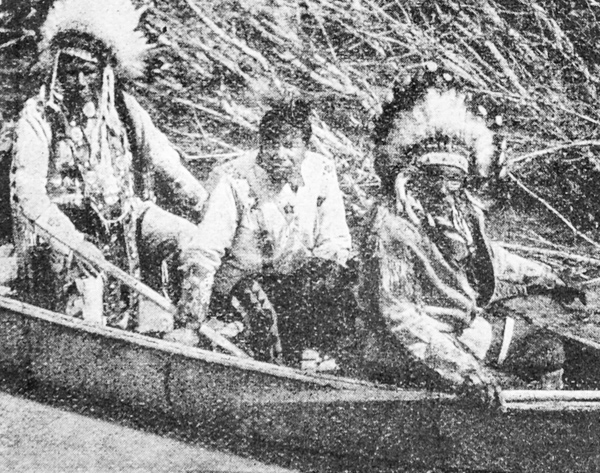
The American Red Men of to-day are wholly partially civilised and no longer go on the war-path as they didl in the “good old days.” Once the Indians were a free and haughty race, living in the great forests and on the vast plains of North America. Hunting, fishing, and war were the only occupations considered worthy of a man, whilst the women tilled the fields in which they grew maize, pumpkins, and tobacco, and did the hard work.
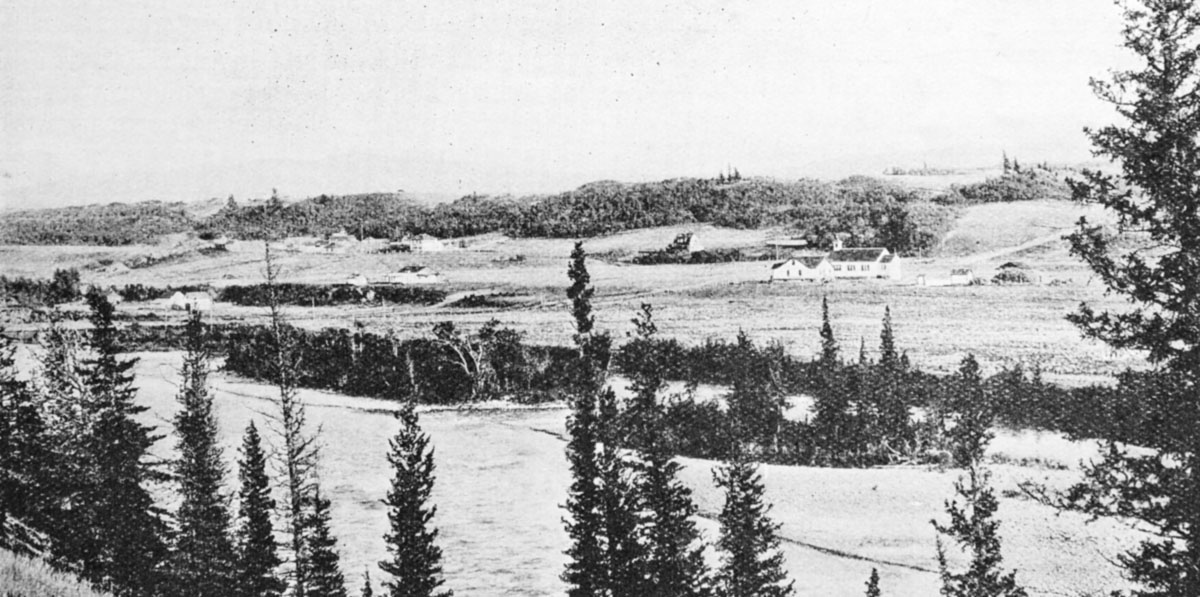
Before the coming of the white men, to their land, the Indians knew nothing of the use of metal. Their weapons consisted of bows and arrows, hatchets of stone and shell knives. Wandering bands, such as those that roamed the great prairies of Canada, lived in pointed tents made of the skins of buffaloes, but the more settled tribes inhabited villages composed of large huts called “long houses,” each of which held several families. These villages were surrounded by wooden palisades, loopholes for arrow shooting, and with platforms on the inside upon which piles of stones were kept ready to throw down upon the heads of enemies trying to force an entrance.
|
It was from such places as these that the Indian braves started forth on their forays against the white settlers or hostile tribes. When war had been decided upon, messengers were despatched to all the villages of the tribe calling the warriors to arms. Then began a time of fasting and praying to the Manito, the “Great Spirit,” for success. Wise men were consulted to explain the meanings of dreams and omens, and finally, on the evening before the expedition started, there came the wardance in which all the warrrors, painted and feathered for war, took part. Then, early the next morning, the party stole silently away into the forest upon its mission of death and destruction.
The game of Lacrosse was a vigorous all-day game with the redskins. But the Red Men were not always engaged on hunting or war. They played games, and chief of these was Lacrosse. Lacrosse was “big medicine” with the Indians, and was a much fiercer and more strenuous exercise than the game we play. If a district were suffering from famine or pestilence, a game of Lacrosse would often be ordered by the medicine-men as a cure. The warriors of the tribe were the players, and on the day fixed the two sides formed up opposite each other, sometimes several hundred strong. Then came a solemn dance, after which the ball was thrown into the air and the game began. Often a game lasted all day without a goal being scored, which is not surprising when we know that the goals were sometimes a mile apart, and that the players used their heavy, netted sticks as clubs, breaking arms and legs and. sometimes killing or maiming each other for life.
The Red Men of North America possessed no written literature, but they had a vast store of legends which were handed down by word of mouth from generation to generation. Their nearest approach to writing was their picture writings and the wampum belts with which they recorded important events. These belts were made of beads worked into different patterns, and they were kept by certain old men of the tribe who were supposed to be able to read them, and remember what they meant. Thus, when two tribes made a treaty with each other, each clause in the treaty was represented by belts of wampum which were solemnly exchanged by the contracting partiess, as nations to-clay exchange pieces of parchment signed by their representatives
Nowadays the Red Men are civilised, or else live on special grants of land called reservations. As a race they have not taken kindly to civilised life. To thrive, they need their ancient, untrammelled freedom of forest and plain, and to-day the Indians of North America are a race of people who are slowly dying out.

|
|
The Japanese are the leading representatives of the yellow races in the world today. They are a wonderful people. As recently as 1853 they were still living the primitive life they had lived for centuries, untouched by western civilisation; then, one day, a fleet of American warships appeared and dropped anchor off the coast of Japan. They had come to demand satisfaction for the ill-treatment of certain Arnerican sailors, and for the first time the Japanese realised the power of the west. There was nothing for the Japanese to do except submit to the terrible strangers, so treaties were made, and for the first time in history the ports of Japan were openecl to the trading ships of the world.
|
But the Japanese had learnt their lesson. They had seen the might of the west, and from that day they determined to become westernised, to make themselves the equal of the great white nations, so that never again should they find themselves helpless under the guns of a foreign power. It required an immense effort, it meant practically the remodelling of the whole of their national life, but they succeeded, and to-day Japan is one of the foremost nations of the world.
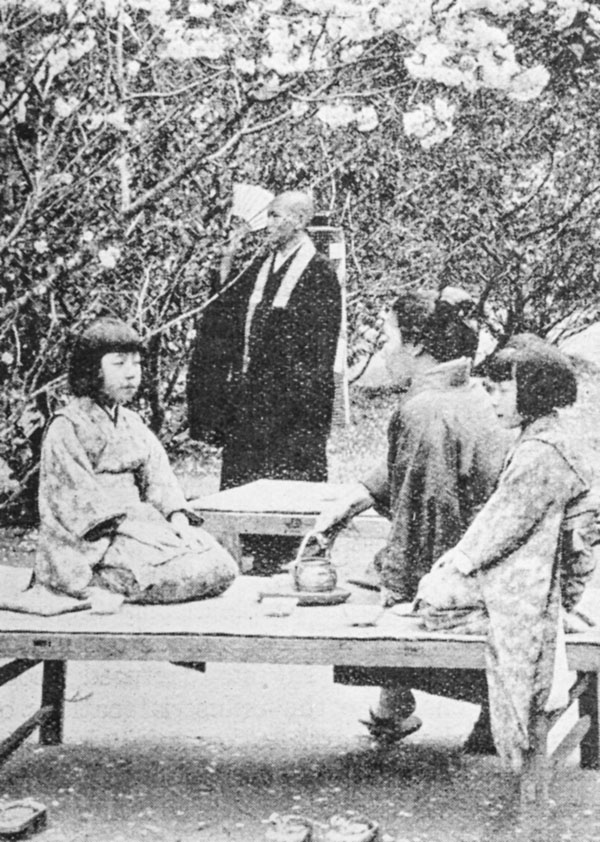
But though the Japanese have become westernised they still retain their national characteristics. They are intense lovers of beauty, and flowers are almost objects of reverence to the Japanese. April, when the cherry tree blossoms, is a time of high festival, and no home is found without its decoration of flowers. So it is all through the year. Every month brings its fresh flowers to gladden the hearts of these lovers of nature, until the chief glory of the year is reached in the autumn when the chrysanthemums are in blossom.
This same spirit is seen in Shintōism, the Japanese national faith. This religion teaches the worship of nature and reverence for the dead, and to it the Japanese owe their courage and that undying love for their country which will cause the meanest to lay down their lives unhesitatingly if by so doing they can benefit the homeland.
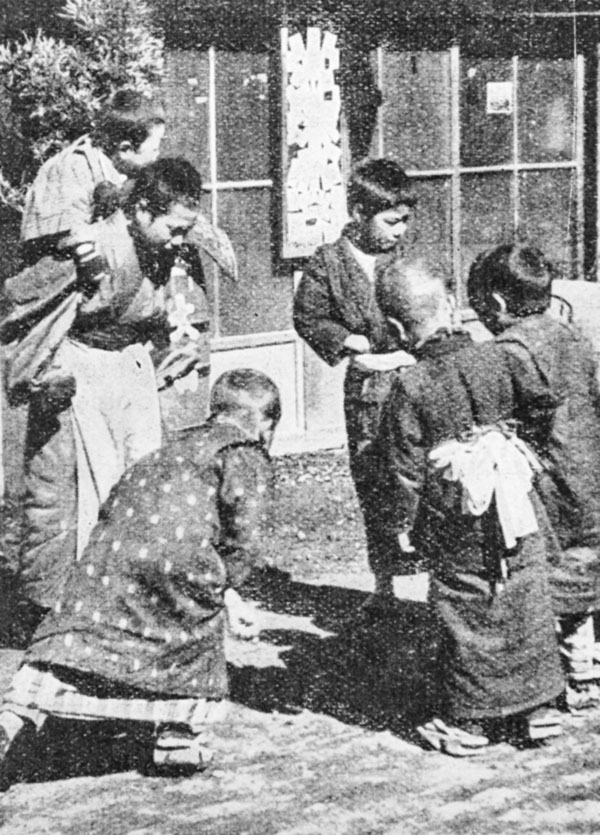
The Children’s festivals in Japan are red-letter days long to be remembered. In no country do the children receive more consideration than in Japan. Each year on March 3 the Festival of the Dolls is held. This festival has been held for 1400 years, and, in every household where there are girls, the dolls which have belonged to the family for generations are all brought out and set up in a special room. Then the girls make cakes, cook rice, and brew a sweet wine, all of which things are laid out before the dolls. When everything has been prepared, the girls put on their best clothes, and call upon each other and receive their friends.
The boys also have their festival, which is called the Feast of Flags, and is held every year on May 5. On that day the streets and houses are decorateel with flags, and every boy is given tiny figures of the great national heroes, and ancient spears, swords, and bows and arrows, which have been handed down in the different families from one geueration of boys to another, are brought out and displayed, This festival is intencled to make the boys patriotic and brave, just as the Festival of the Dolls is intended to make the girls womanly, and to teach them the beauties of home life.
|
Elegancy and efficiency mingle in this land of earthquakes and industry. Japan is a land of earthquakes. Scarcely a day passes without a shock, and for this reason most Japanese houses are lightly built of wood, with light, sliding partitions instead of dividing walls. There is little furniture In a Japanese house. A few pictures hang on the walls. There are beautiful flowers in porcelain vases, and mats upon the floor on which the inmates sit. At night, thick quilts are taken out of cupboards and laid on the floor, and these, with other quilts to cover them and wooden pillows for their heads, are the beds upon which the Japanese sleep.
Japan has been called the Britain of the east, and certainly its people display the same indomitable spirit which has made our nation what it is to-day. In manufactured goods they now challenge the industrial nations of Europe, and cheap articles formerly “Made in Germany” are now marked “Made in Japan.”
|
In all hot countries we find sun-tanned people. India, land of many races, possesses a civilisation older than our own; yet, in spite of this, the bulk of her people are still sunk in ignorance. This is partly due to the “caste” system of the Hindus, which keeps a man from rising above the station into which he was born. A caste is a group of people who follow the same trade, or hold certain religious beliefs, and each caste is separated from all other castes by strict rules regarding food, marriage, and other details of life. There are about three thousand castes in India, and for a Hindu to break his caste is a very serious matter, and he has to undergo long ceremonies of purification before he can regain his lost position.
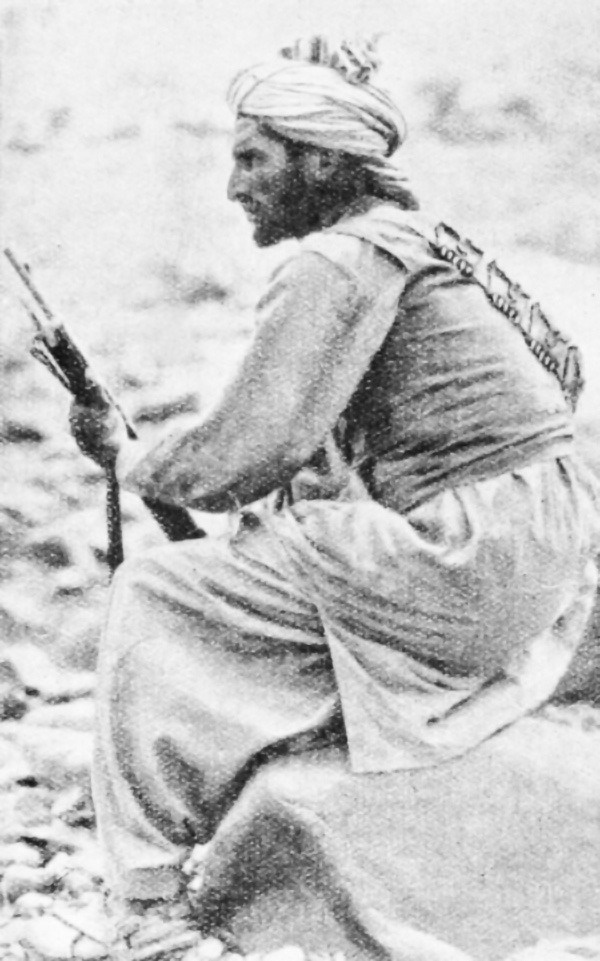
India, you see, is not such a free country as our own. The women are usually kept in strict seclusion, and a man born in a caste remains in that caste all his life, and no amount of hard work or learning can raise him to a higher caste. The vast bulk of the people are agriculturists, but there are warrior races like the Sikhs and Rajputs who form a large part of the Indian army. This army is partly officered by British officers, and day and night it keeps watch along India’s turbulent north-west frontier. Were it not for this sleepless watch, the savage hill tribes would pour down from their valleys, and the fertile plains of India would again become the battle-ground of contending races.
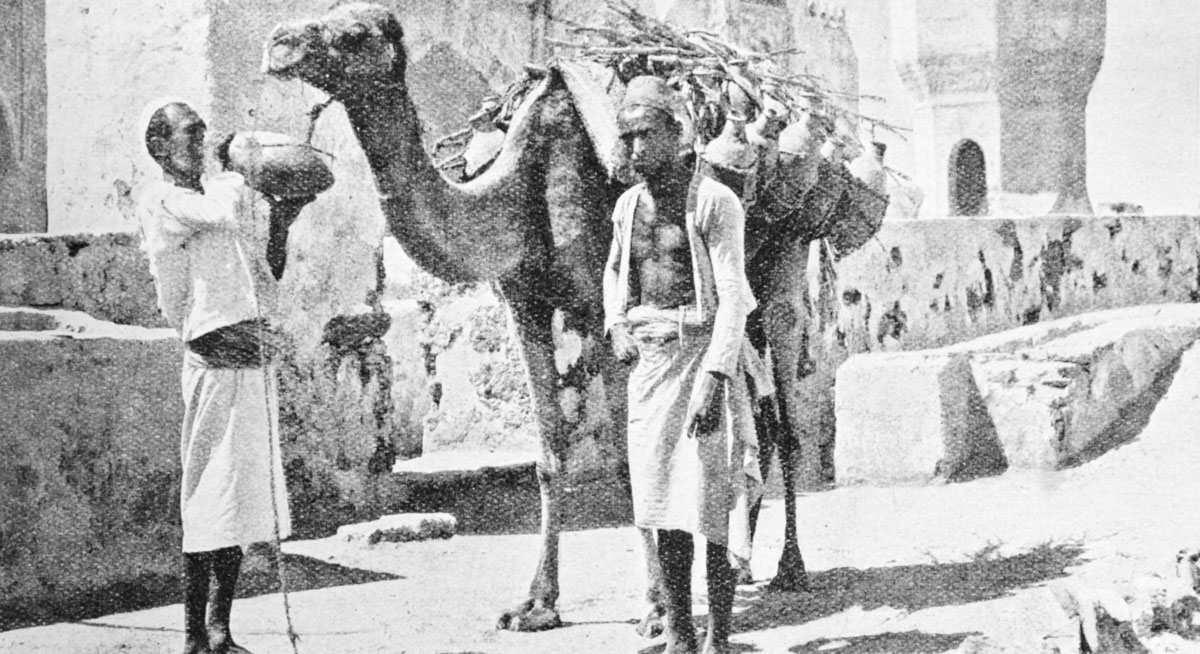
The warlike Arabs are still another dark-skinned race. Some live in cities or villages built of dried mud, but the Bedouins, or roving Arabs, live in goat-skin tents which are easily moved from place to place as the tribes roam about in search of pasture for their herds. Each tribe has its sheik, who is always ready to lead his clan to the plundering of some passing caravan should fortune bring one within their reach. The Arab women are as brave as the men, and not very long ago, when two Arab clans went to war, the contending forces were each led by a brave girl of the tribe mounted on a black camel. As these girls rode into battle, they sang warlike songs to encourage their clansmen, and round them the fight always raged fiercest. If one were killed it usually meant the utter rout of her tribe, whilst the maiden of the conquering clan led her warriors back in triumph.
|
Strangely different, however, is the life of the Arabs, living in their hot, dry country, to that of the Polynesians who inhabit the tropic islands of the Pacific. These are, indeed, a happy, care-free race. The warm climate and the rich soil together provide almost all their wants. They never have any winter. A loin cloth for the men and a girdle of leaves for the women are all the clothes that are needed, and often these handsome people may be seen bathing and disporting themselves in the warm sea. Nature has done so much for these happy folk that they are inclined to be lazy. There is not the need to be up and doing to keep body and soul together that there is in more northerly lands, and perhaps that is one reason why the white races of the world have climbed so much higher in the scale of civilisation than the earth’s sun-tanned people.
In the present age the white races are the rulers of the earth. They are divided into three families known as the Teutonic, the Latin, and the Slavonic. The Teutonic races are the Anglo-Saxons, Germans, Danes, Swedes and Norwegians. To the Latin group belong the French, Spaniards and Italians, whilst the Russians and Poles are the chief Slavonic races.
These Slavonic races are generally less advanced than the races of the other great families. Their lower classes are still steeped in ignorance and they lack the initiative of the Teutonic or the Latin people. There is in many of them, also, a large share of eastern blood, so that the Slav races belong half to the east and half to the west. France is the foremost Latin nation, as Great Britain is the greatest Teutonic nation in the world. They are also the greatest colonial nations, and in the eighteenth century the French and British engaged on a long struggle for the possession of vast overseas territories in India and North America. That the British won was partly due to their greater gifts of colonisation. The ruling idea behind British colonisation has always been to develop the new country for the benefit both of the original inhabitants and the British settlers, whilst the French only saw in their colonies sources from which they might extract wealth to be used for the benefit of European France.
This gift for colonisation is one of the chief characteristics of the British. The Germans, our cousins, do not possess it. They lack the sympathy, the power to be both a firm ruler and a kind father which is found in the great British colonial administrators. It may be that we owe this gift to the Roman blood in us. The Romans were the other great colonising race of history, and we British are partly descended from the Romans, who occupied Britain for over four hundred years. Our position on an island has also contributed to this urge to conquer new lands. England was too small for the eager spirits of her adventurers, so they sailed away in little ships and founded settlements in new countries, settlements which have expanded into the great British Commonwealth of Nations, as well as into that other great Anglo-Saxon nation, the United States of America.
As a general rule the races of the west are more energetic than those of the east. They feel they must be up and doing, whilst the east is inclined to put off till to-morrow what should be done to-day. No doubt this spirit has helped to make the white races the rulers of the world, and their efforts have not only given them supremacy in riches and power, but have also caused them to lead the world in painting, music, and literature. The Italians have produced the greatest school of painting the world has ever seen; Germany is the, homeland of the greatest musical composers whilst our little island has produced a literature the greatest in the world since Greece.
But these things are of the past. There is danger of the white races becoming too materialistic. No selfish nation has ever prospered. Spain lost its great colonial empire because it used it only for the benefit of Spain; France failed in Canada and India for the same reason. We should remember these things. Our nation has great power in the world, and so long as it uses it for good so long will it remain the greatest empire the world. has ever seen.