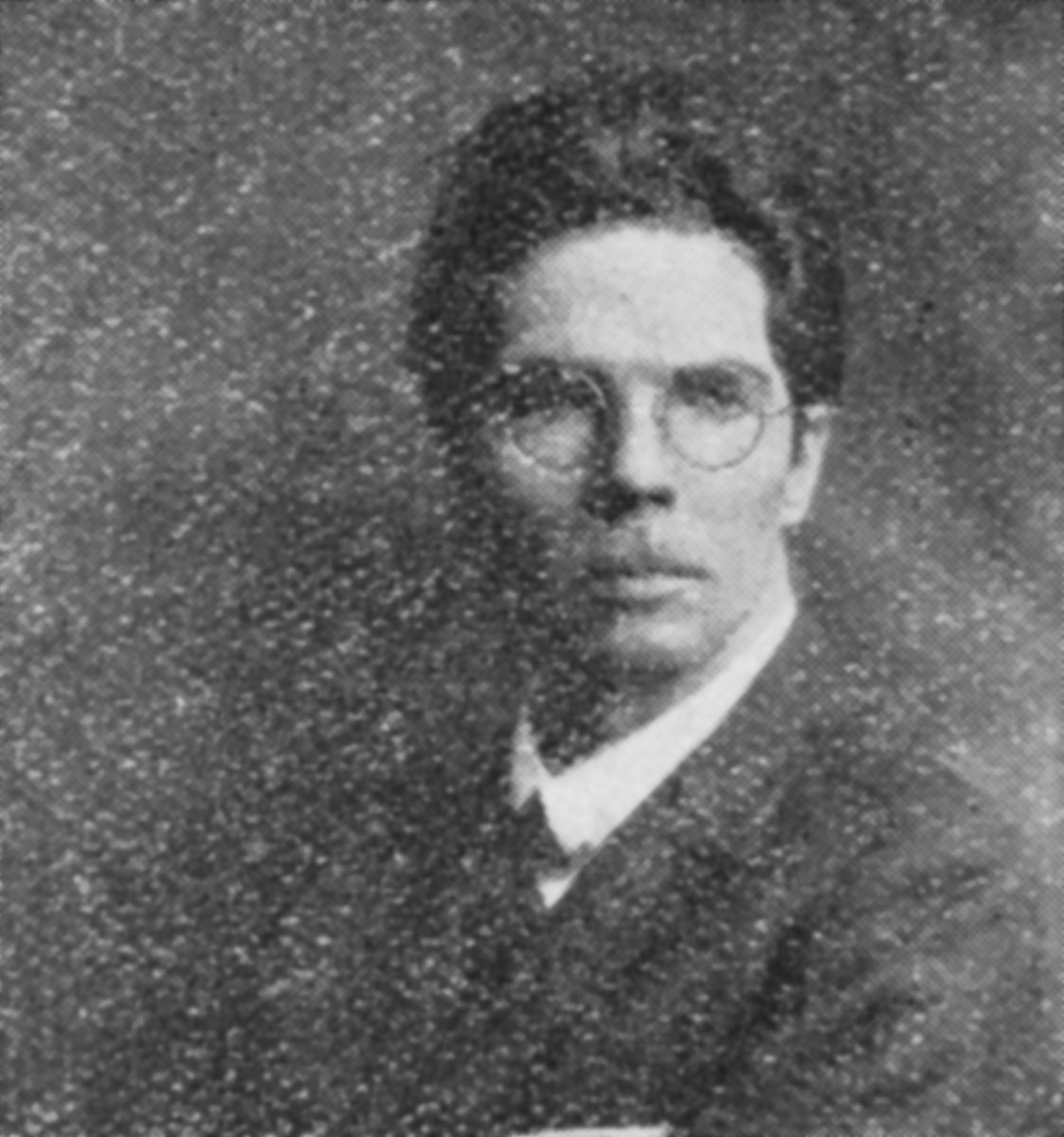
Professor Low is a scientist and inventor of great repute. He invented the audiometer for the photography of sound and was a pioneer of television. During the great war of 1914-18 he invented the wireless controlled torpedo and many secret patents. In this introduction to the portion of our book that deals with other worlds and the growth of our own, he speaks of the immensities of space in the universe and of our short period on earth.
THE first sign of a child’s intelligence is an appreciation that the world is not bounded by the walls of a nursery. A baby very soon realises that parents, brothers and sisters, are not the only people in the world.
In a sense, all human beings grow up in the same way every year. Hundreds of years ago, our ancestors believed that “the world” consisted of what we now know to be less than a continent.
Later, they thought the earth, the sun and the planets represented the whole of creation. Now we believe that the solar system is but a very small part of creation, and that the extent of the universe is quite unknown. The oldest and wisest scientist would readily admit that there are probably worlds of which he has no knowledge and which he cannot even picture in his mind
|
|
During recent years when microscopes and telescopes have become increasingly powerful, our knowledge of the bigness and smallness of created things has become almost frightening. But as soon as a little of the working of this universe is understood, it seems no longer frightening, but very wonderful and much more beautiful than any fiction.
By examining rocks upon the earth, we are able to guess that men have existed for hundreds of thousands of years, while the earth itself is about 2000 million years old. For millions of years it was merely a fiery mass, like a small sun. The coming of life was followed by more millions of years during which man was evolved from simple forms of life. Even when, hundreds of thousands of years ago, man in something like our own likeness came into existence, a very long time had to pass before he became intelligent.
During all but the last three hundred years of this recent period, men regarded the world as the centre of creation. The first men to suggest that this globe was not, perhaps, the most important of the many heavenly bodies were regarded as harmless lunatics or dangerous revolutionaries, attempting to dethrone Man from his supreme position!
Since it was first realised that the sun is the centre of the solar system, and that this earth is only a fragment flung away from a large and very hot star, our ideas of our place in all creation have undergone a great change. We believe now that the solar system is only a small part of what we call the universe, which contains many other stars, far larger and hotter than our sun. We also believe that possibly other equally large universes exist beyond our own.
To grasp some idea of the place of man and the earth in space, try to imagine the universe as a map. Towns perhaps a few hundred of miles apart are shown as black dots only an inch apart on some maps of the world. Usually the scale of a map of the world is one in a hundred million—that is, two towns about 1500 miles apart are an inch apart on the map. If we had a map of the universe on this scale, the sun would be a mile away from the earth and it would look as big as a church!
A very large map would be needed for the solar system and a whole continent would be covered by one of even the smallest parts of thc universe. The nearest “fixed star,” which has the unromantic name of Alpha Centauri, is about sixteen billion miles away! When we begin to explore the universe, distances become so tremendous that we have to abandon ordinary measures, like yards and miles, and speak in terms of “light-years,” that is, the distance light travels in one year.
Light travels at a tremendous speed—it takes only 1-186,000th part of a second to travel a mile and in a year it covers five and a half billion miles! If the sun were suddenly to go out like a candle, we should not know anything about it for eight minutes and, in spite of the great speed of light, if Alpha Centauri were to disappear into space tomorrow, the newspapers would not be able to tell us the news for three years !
But Alpha is a next door neighbour compared with some of the other stars, The most remote star seen in the most powerful telescope is 140 million light years away—that is to say, the pin prick of light seen in the telescope left the star 140,000,000 years ago—long before man appeared on the earth,
As the telescope has enlarged our horizon outwards, so the microscope has increased our knowledge of little things. We hear a great deal of talk about atoms, for instance, but how many people realise that there are millions of billions of atoms in an ounce of hydrogen and your body contains many ounces of hydrogen. You must seem as big to an atom, as the universe seems to you!
Now we are coming to even smaller things. We know that atoms themselves are made up of smaller particles. and it seems as if we shall eventually find each atom is in itself a solar system, or perhaps a universe!
To know about the place of man in creation makes life very much more interesting. It might have been self-satisfying to our forefathers to think that the sun shining in the sky was the greatest sun in existence, especially placed there for their benefit. But it is more wonderful to know that the whole universe we can see on a clear night is only a small part of creation and that even the full stop at the end of this sentence contains millions of atoms, each one of which is, perhaps, a universe in itself.
To observe and to think about the latest discoveries of science, and the manner in which they can affect us, makes ordinary things like puddles of oil in the road more beautiful. We can measure the thickness of the oil film producing the colours in thousands of an inch, just as we can measure the heat falling on the earth from stars billions of miles away.
Man has now been living on this little earth probably for some two or more hundred thousand years. Scientists suggest he will continue to inhabit the earth for at least another million million years! If we reckon the whole period of his existence as seventy years, then he is still a new born infant, only just guessing that there are other people in existence besides his mother! And all our great discoveries have been made, again speaking comparatively, during the last few seconds!
We should realise how wonderful it is that we have been selected for this moment—the moment of awakening. This thought alone should make us want to know everything, to be thirsty for knowledge about ourselves and our amazing past,
The greatest discoveries of science are that we have all very little knowledge, but that our bodies, our largest buildings, and everything we see. are subject to everlasting change. It is only by thinking of the wonders of existence and by observing the happenings of every day life that we can hope to make progress.
Never be prejudiced, try always to remember the scientists’ motto that “what is good enough for to-day is not quite good enough for to-morrow.”