It is a fascinating world in which you are beginning your lives, a world made up of many races of people, of different colours, habits and customs. Some collections of families are grouped in home-made huts, while others herd together in cities where the only space to build is skyward. Here tenements and skyscrapers rise above the ground. Some people obey man-made laws, while others obey only the law that says the fittest shall survive. In this medley of the wonderful and the curious you will live your lives, and to live them well some knowledge of other lands and their peoples is necessary. The pages that follow give you glimpses that will make you desire to find out more about the lands afar.
|
|
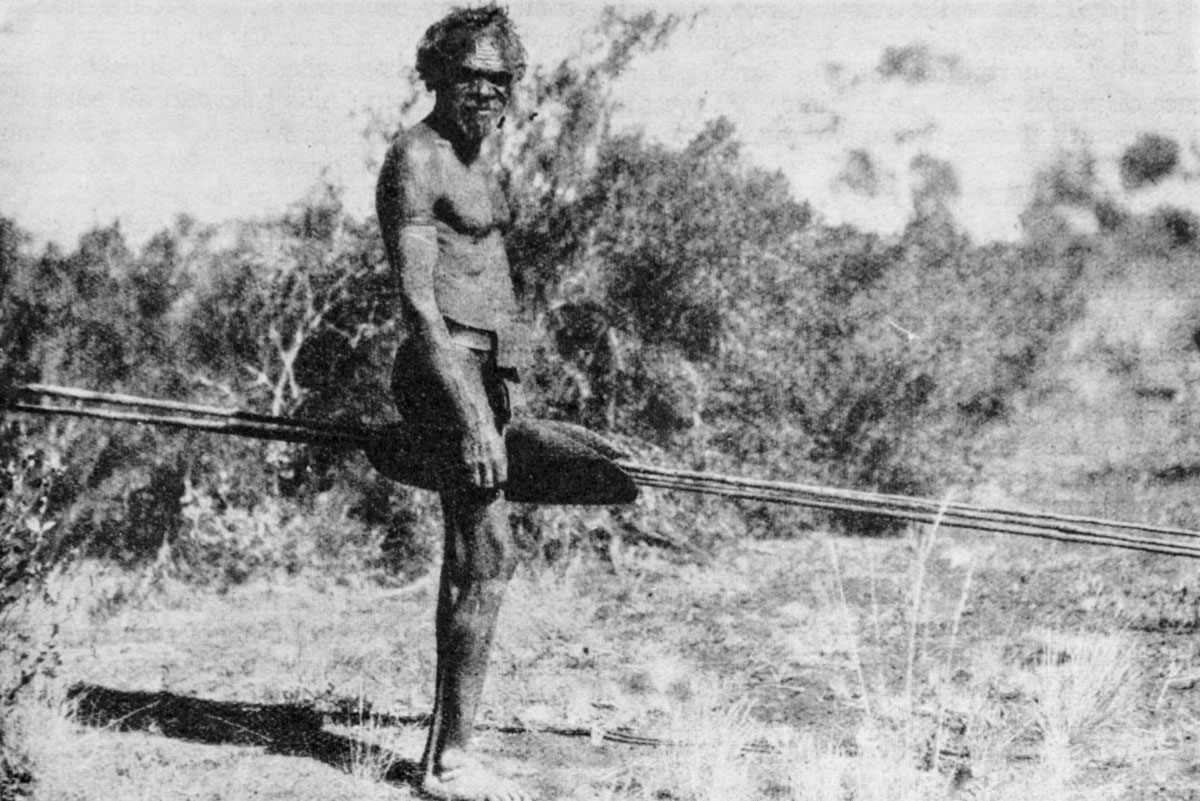
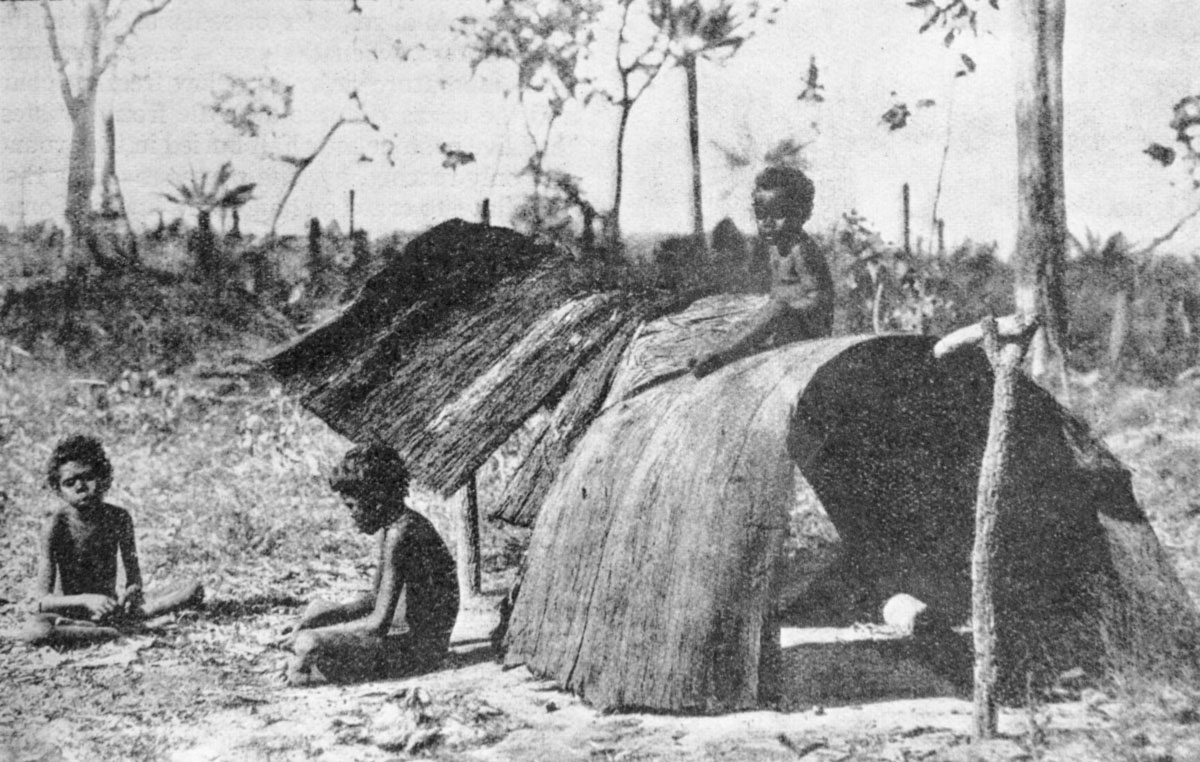
In spite of modern civilisation, there are races in existence to-day who live as our ancestors lived 25,000 years ago. When the British first discovered Australia, the natives or aborigines were still living in the Stone Age. They knew nothing of metal, and their weapons consisted of spears, clubs, and a curved throwing stick called a boomerang. They were acquainted with fire, which they made by rubbing two sticks together, but they had not invented bows and arrows, they knew nothing of agriculture, and they wore no clothes except a few skins in cold weather.
Yet even though they were so ignorant these Blackfellows were magnificent hunters. They had to be. In Australia there are vast tracks of almost lifeless desert, and, as starvation was the certain lot of the poor hunter, hunting became the Blackfellows’ chief business. They knew every habit of the animals they hunted and could imitate their cries so as to deceive the very creatures themselves. Ages ago, no doubt, they discovered that the emu is a very inquisitive bird and accordingly the Blackfellows hunted the emu in pairs. One of them would bury himself up to the waist in the ground, and then cover the exposed part of his body with an emu skin, whilst his companion hid himself close by in a clump of bushes. When everything was ready, the man in the bushes would start making the cry of the emu, whilst his companion waved his head and body about in all sorts of grotesque motions. If there were any emus within hearing they would be attracted by the cries, and when they saw what appeared to be an emu contorting itself on the sand their curiosity compelled them to draw near and investigate. Whereupon some of them would be speared and the hunters would return rejoicing.
The Blackfellows could detect the presence of reptiles by watching the behaviour of birds, and they supplied themselves with honey by catching a bee, attaching a piece of fluff to its body, and then following the insect to its hive. Yet, for all their skill, there were times of want when they were thankful to eat grubs, ants, moths and roots, in fact, anything eatable.
But though it is true that most of a poor Blackfellow’s life was taken up with finding food, he nevertheless had his primitive amusements. The chief of these was the corroborree or native dance. Sometimes the dance represented the hunt, and the dancers, their painted bodies gleaming in the firelight, would go through all the stages of tracking, finding, and making the kill; at others they acted a fight between two tribes, and all the incidents of battle were shown with hideous realism.
The Blackfellows of Australia are dying out. Civilisation does not agree with them, and only in the tropic areas of Northern Australia do we find these primitive people living as their ancestors lived hundred of years ago.
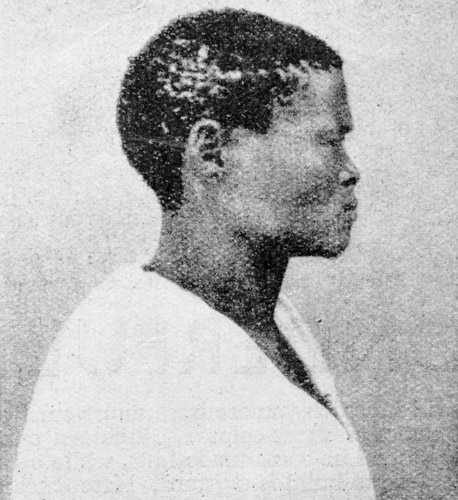
Another primitive race is the Bushmen or pygmies of Africa. Bushmen are passionate lovers of freedom, which is perhaps why it is so difficult to civilise them. Like the Blackfellows, they make fire by rubbing two sticks together, and they live in rude huts, or holes in the earth.
|
These pygmy African people live by hunting, and their chief weapon is the bow and arrow. Their arrows are poisoned, and the slightest wound would kill the largest animal in a few hours. So fleet of foot are the Bushmen that sometimes they will actually run down an animal and kill it, and when they have made a kill they have a feast. They are great eaters, these small people, and half a dozen of them will sit down to a zebra, and not leave off eating until they have finished him.
Knowing nothing about farming, they eke out their animal food by digging up roots. Their pottery consists of ostrich eggs which they use to store and carry water, and they wear hardly any clothes. In one direction, however, they have advanced farther than the Blackfellows. The Bushmen can draw. Like the Real Men, they are fond of decorating the walls of caves with paintings of animals, men, and women, and their pictures are rendered in four colours, black, white, yellow and red. They also have a great number of legends connected with animals, and the sun, moon, and stars. They know many of the constellations by sight, and have given them names of their own. Orion they know, and the three stars which form Orion’s Belt they call “three she-tortoises hanging on a stick.” The. Bushman also is fond of music, and has a primitive instrument made out of a hollow gourd and a few strings.
There are several of these primitive races in different parts of the world, races which stopped short thousands of years ago, and have made no further progress. Such races often die out when brought into contact with civilisation, so it would seem as though civilisation is a thing which has to be learned slowly.
The Blackfellows also perform very curious and even painful rites when they admit a youth to the dignity of manhood. One of the tests under which the young man has to go is that of fire. A fire of twigs and branches is made, and when this is burning out, and the smouldering embers are belching forth their smoke, the youth must lie in their midst, and stay there for a specified time without shrinking or complaining, while the hot and burning wood sears his skin. If he survives the terrifying ordeal without flinching or showing a coward’s heart, he becomes a fully qualified member of the tribe.
These poor, ignorant _people have queer ideas of beauty, and will suffer much pain to achieve that state of perfection. They cut gashes in their flesh and then, when the wound is almost healed, tear it open again. This process is repeated until the wound eventually heals leaving a raised weal of flesh. These weals form lines or designs on the chest or limbs. Imagine a Blackfellow, or woman, so disfigured, and with the eyebrows and front hair plucked out by the roots, and you will feel sorry that these poor savages know no better means of “improving” their appearance. It must be remembered, however, that various peoples have dlfferent ideas of beauty.
|
|