|
|
THERE was an old Latin poet, called Juvenal, whom you probably have not read, and he wrote a line which might be the truth of this encyclopedia: Quidquid agunt homines, nostri farrago libelli. As perhaps you do not know enough Latin to translate this I will do it for you, “Whatever men do is the hotch-potch of my little book.” But on second thoughts this does not seem suitable, for this encyclopedia is not a hotch-potch, and it is not a little book. What does suit it is the title “Whatever men do” and we might fairly add “Whatever men have done.”
I expect that if you are intelligent and bright, you begin quite a lot of your remarks, when you are talking to older people, with those little words, Why? What? When? How? By all means go on doing it: it is one of the best ways of finding out the tons of things that you want to know. Only there is one disadvantage about it, or perhaps two: there are not always older people on the spot whom you can ask, and they do not always know the answer. That is just where this book comes in. Here it is, always ready to hand, an older person who knows more about everything than any older person that you know, Open the covers and ask.
For there is something here for every taste and every curiosity. When I look at the world as it is to-day and think of the world as it was when I was a boy, I realise that it has been very largely changed: and there is nothing more certain than that, when you are as old as I am, the world will have been changed all over again. If you ask me how it has been done, I can tell you that it has been done by modern science. But if you ask me again, as you probably will, When? and in what ways? I shall tell you to go to this book, and read about the march of science and electricity and the telephone and radium and X-rays, and so on. Then you will soon come to know how much has happened, and how quickly; you will also find out what a little time ago it was that men knew nothing about all sorts of things which you take for granted.
|
You may be interested in another branch of Science, in Natural History. There is certainly no end to what is to be learned there, but you can make a good beginning in this book. You can learn about yourselves too, for your own bodies are part of the kingdom of Natural History, an all-important part for you. Or again you may be one of those people who like most to read about what men have done in past days, and History is an exceedingly wide subject, by no means so dull as some of the schoolbooks make you think it to be. You will find a great deal here, about “Famous Fights” of former times, and about “People who have done Great Things”; and not only these, but others who are perhaps even more important, who have thought great things, and are the real shapers of human life. Here you can learn about literature and art, and something of the thoughts and ideals which makes us what we are. Or yet again—for here is a treasure-house to the end of which you will not easily get—you may be more interested in the Everyday Things about you, and you may like to know something more about the food you eat, and the clothes you wear, and the houses you live in, and how the things which you use are made, like books and all kinds of printed stuff. Well, you have only to look inside this book and see. Even if you were not attracted by anyone of these things, but just like to do things and to make things, you can turn yourself into a very useful sort of person of a kind much needed in the world. And you can start by finding out from this book what sort of tasks you can try your hand at first-s-tasks which won’t prove too hard.
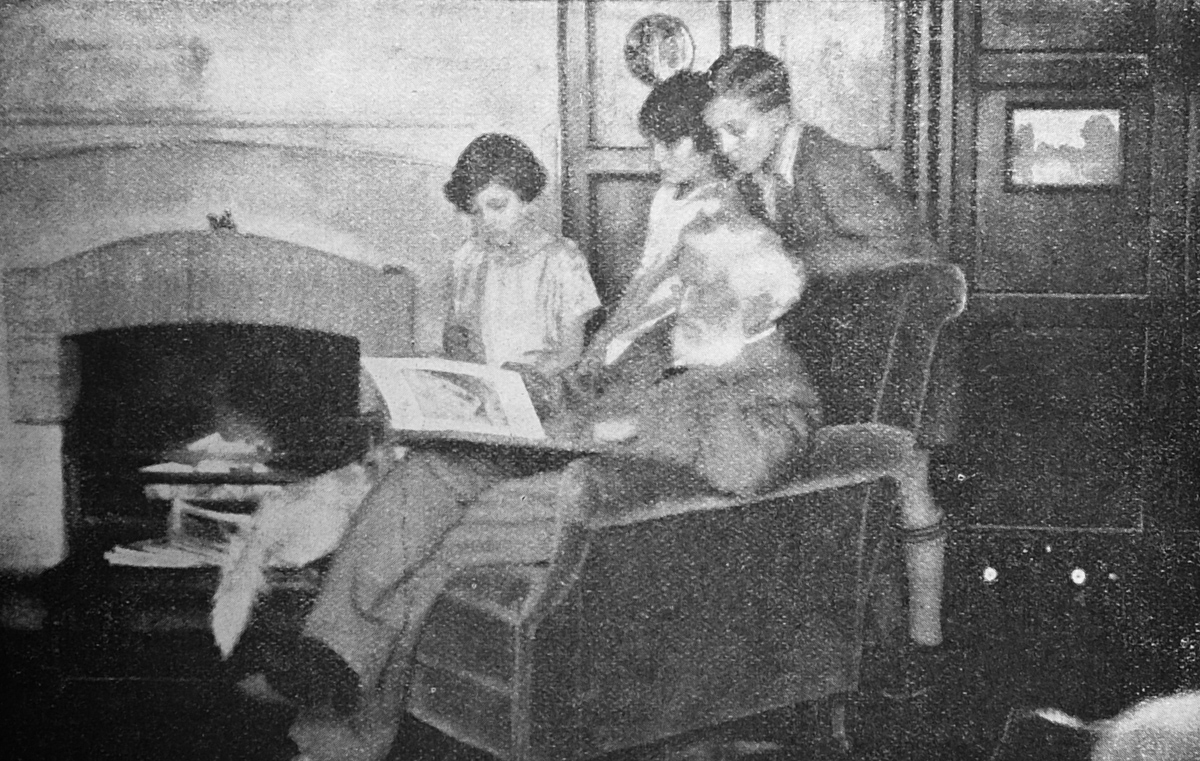
There is another old Latin poet, whom we call Horace, who wrote: Segnius irritant animos demissa per aurem quam quae sunt oculis subiecta fidelibus. Luckily too difficult for you to translate, so this is what it means, “What comes in through the ear is not so sharp a spur to the mind as what is presented to our trusty eyes,” or, quite briefly, “Seeing is believing.” And this book is better than any older person, for it not only tells you, but it shows you, what the thing or the person looks like. One of its most excellent features is that it has so very many good pictures. On every page you can see what the writers are talking to you about, and, because you can see, you can understand at once.
So here is the book: open it and enjoy it.